 Skip to content
Calgary’s climate is not kind to roofs. With temperature swings that can drop from +30°C in summer to −40°C in winter, ice damming in spring, heavy hailstorms in June, and relentless UV exposure in July, a flat roof in Calgary faces stresses that most North American markets never see. Understanding how flat roofing repair and installation in Calgary systems work — and when they fail — is not just useful knowledge. It is essential for protecting your property investment.
What Is a Flat Roof System?
A flat roof, technically called a low-slope roof, has a pitch of less than 2:12 — meaning it rises less than two inches for every twelve inches of horizontal distance. This near-horizontal geometry is popular in commercial buildings, multi-family residential properties, and modern architectural homes throughout Calgary and the wider Alberta region.
Unlike sloped roofs that shed water by gravity, flat roofs rely on engineered drainage systems — including interior drains, scuppers, and tapered insulation — to move water off the surface. When any part of that drainage system fails, water ponds. Ponding water is the leading cause of premature membrane deterioration and structural damage in flat roofing.
The roof assembly itself consists of several layers: a structural deck (concrete, steel, or wood), a vapour barrier, rigid insulation board, and a waterproof membrane on top. Each layer has a specific role, and a failure in any one of them affects the entire system.
Common Flat Roofing Systems Used in Calgary
TPO (Thermoplastic Polyolefin)
TPO is currently the most widely installed flat roofing membrane in North America. It is a single-ply membrane that reflects UV radiation, which reduces cooling loads in summer — a meaningful benefit for commercial properties. TPO seams are heat-welded, creating a continuous watertight bond. In Calgary’s climate, TPO performs well, though it can become brittle with age if a lower-grade formulation is used.
EPDM (Ethylene Propylene Diene Monomer)
EPDM is a synthetic rubber membrane that has been in use since the 1960s. It is prized for cold-climate performance: the rubber remains flexible even at −40°C, which makes it a strong choice for Calgary winters. A well-maintained EPDM roof can last 25 to 50 years. Seams are bonded with adhesive or tape, and penetration flashing requires careful detailing to prevent water intrusion.
Modified Bitumen
Modified bitumen is a reinforced asphalt system that comes in two primary installation methods: torch-applied and self-adhered. It provides excellent puncture resistance and waterproofing, making it a reliable choice for roofs with foot traffic or mechanical equipment. Modified bitumen is a proven, cost-effective solution common in both residential and commercial applications across Calgary and Edmonton.
Built-Up Roofing (BUR)
Built-up roofing is the oldest flat roofing technology still in common use. It consists of alternating layers of bitumen and reinforcing fabric, topped with aggregate (gravel or mineral granules). BUR systems provide excellent insulation values and long service lives. The multiple redundant layers mean a single point of membrane damage rarely leads to an immediate leak.
Warning Signs Your Flat Roof Needs Repair
Flat roof damage is often invisible from inside the building until it has progressed significantly. Proactive inspection — at minimum twice yearly, in spring and fall — catches problems early when repair costs are small.
Ponding water that remains on the surface more than 48 hours after rainfall indicates a drainage problem. Even a thin film of standing water accelerates membrane degradation by up to 40% over time.
Blistering or bubbling on the membrane surface signals trapped moisture or air between the membrane and the substrate. Blisters that are left unaddressed will eventually rupture, creating open pathways for water infiltration.
Cracking, splitting, or alligatoring in the membrane surface is a sign of thermal fatigue. Calgary’s dramatic temperature cycling — sometimes 30°C of swing within a single day — places extreme stress on roofing membranes over time.
Interior water stains on ceiling tiles or drywall below the roof indicate active infiltration. By the time staining appears, water may have been travelling through the insulation layers for weeks or months.
Deteriorated flashing at parapet walls, mechanical curbs, skylights, and drains is the most common failure point. Flashing seals the transition between the membrane and vertical surfaces; when it fails, water channels directly into the wall assembly.
The Flat Roof Installation Process
A professional flat roof installation is a multi-stage process that typically spans two to seven days depending on roof size and complexity. Understanding the process helps property owners evaluate contractor proposals accurately.
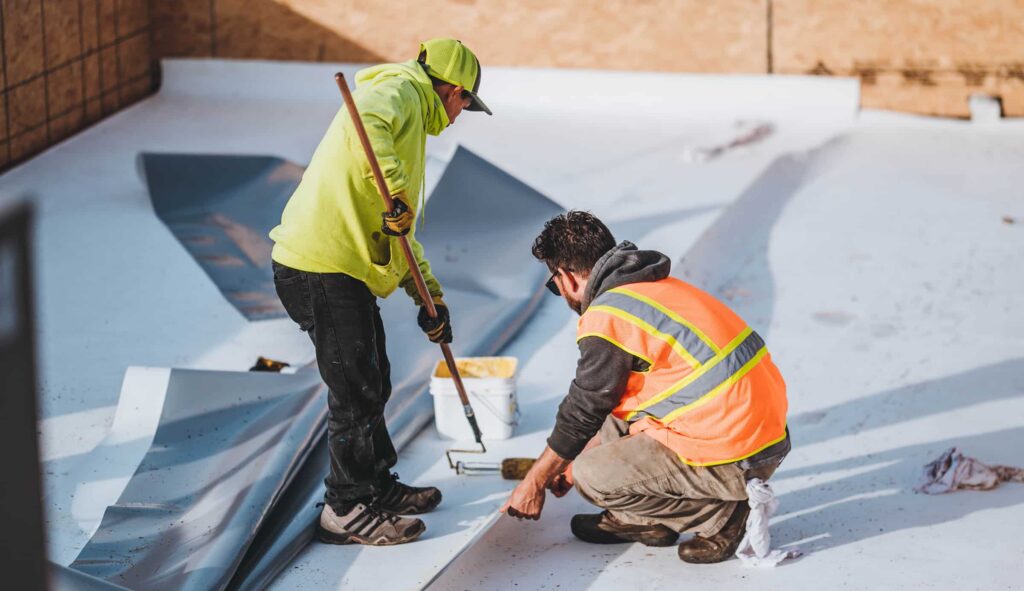
The work begins with a full tear-off of the existing roofing assembly — down to the structural deck in most cases. The deck is inspected for rot, delamination, or structural compromise. Any damaged decking must be replaced before the new system is installed; installing a new membrane over compromised substrate is one of the most common and costly roofing mistakes.
Next, a vapour barrier and insulation board are mechanically fastened or adhered to the deck. Proper insulation design is critical in Calgary: the insulation layer must meet or exceed the Alberta Building Code’s thermal requirements (RSI 7.0 for most commercial applications) and must be tapered to direct water toward drains.
The membrane is then installed according to the manufacturer’s specifications. Heat-welded seams on TPO and PVC membranes are tested with a probe to confirm weld width and integrity. Flashing details at all penetrations and terminations are completed last — these details represent roughly 80% of all future leak sources if not executed correctly.
A reputable contractor provides both a material warranty from the manufacturer and a workmanship warranty on the installation itself.
Flat Roofing Costs in Calgary: What to Budget
Flat roofing costs in Calgary vary significantly depending on roof size, membrane type, access conditions, and the extent of any substrate repairs required. General budgeting ranges include:
- Minor repairs (leak sealing, isolated membrane patching, drain cleaning): $300–$1,500
- Moderate repairs (zone membrane replacement, ponding water correction, multi-point leak remediation): $1,500–$5,000
- Full installation or replacement: $5,000 and up, with large commercial projects scaling considerably higher per project scope
These ranges are starting points. Any contractor who provides a firm price without conducting a thorough physical inspection of the roof surface, drains, flashings, and underlying structure should be approached with caution. Proper scoping requires eyes on the roof.
Choosing a Flat Roofing Contractor in Calgary
The flat roofing market in Calgary includes a wide range of contractors, from large commercial roofing companies to small owner-operated crews. Regardless of company size, the contractor you hire should be able to demonstrate industry certifications, carry current WCB coverage and liability insurance, and provide written references from comparable projects in the Calgary area.
Transparent, itemized estimates — not lump-sum quotes — allow you to understand exactly what work is being performed and what materials are being used. A contractor who can explain the difference between a TPO 60-mil membrane and an 80-mil membrane, or who can discuss the specific design requirements of your building’s drainage system, is demonstrating genuine technical knowledge rather than sales familiarity.
Emergency repair availability matters in Calgary. Hailstorms and freeze-thaw events can cause sudden membrane failure, and a contractor who offers 24/7 emergency response ensures that a roof breach does not become a full interior water-damage event before business hours resume.
Anytime Construction Inc. provides flat roofing repair and installation services across Calgary, Edmonton, and Brooks — serving both residential and commercial properties with certified professionals, transparent pricing, and full workmanship warranties. For a free, no-obligation estimate, contact them at (403) 918-1320 or visit anytimeconstructioninc.com/flat-roofing-repair-installation.
Maintaining Your Flat Roof: Extending Lifespan Beyond 20 Years
A flat roof that receives no maintenance rarely achieves its rated lifespan. One that receives scheduled attention routinely exceeds it. A practical maintenance programme for Calgary conditions includes:
- Spring inspection after snowmelt: check for membrane damage caused by ice movement, clear all drains and scuppers of debris, and inspect flashing at all penetrations
- Fall inspection before freeze-up: ensure drains are clear, address any blistering or cracking identified over summer, and apply flashing sealant where needed
- After major hailstorms: conduct a membrane assessment — hail impact can puncture or weaken TPO and modified bitumen membranes in ways not immediately visible
- Annual professional inspection: a qualified roofing contractor can identify substrate moisture intrusion using infrared thermography, catching wet insulation before it causes structural damage
The cost of annual maintenance is typically a fraction of the cost of a single emergency repair — and a small fraction of the cost of a premature full replacement. Preventative care is the highest-return investment a flat roof owner can make.
For professional flat roofing repair and installation in Calgary, Anytime Construction Inc. offers certified expertise, honest pricing, and lasting results. Call (403) 918-1320 or (825) 454-8009 for your free estimate.
